

Chenille Embroidery Machine
Zhuji Yuanheng Sewing Equipment Co., Ltd.
Zhuji Yuanheng Sewing Equipment Co., Ltd. manufactures computerized embroidery machine. We have 20 years' experience for manufacturing and selling Chinese embroidery machine.
Why Choose Us
Advanced technology
We are professional manufacturer specialized in orthopedic and sport products.
Our Service
Our service runs throughout the whole production process from the pre-sales, product design, production and after-sales.
Various products
We have all kinds of embroidery machines
One-stop Solution
Support to customers to ensure a smooth transaction.
-
![9 Needles FIFTHEEN Heads CHENILLE Embroidery Machine]() 9 Needles FIFTHEEN Heads CHENILLE Embroidery Machine(1)Product selling points: 9 colors 15 Head flat +CHENILLE Embroidery Machine For Clothes . 9 needles FIFTHEEN heads factory use industrial flat MIXED CHENILLE Embroidery Machine For...read more
9 Needles FIFTHEEN Heads CHENILLE Embroidery Machine(1)Product selling points: 9 colors 15 Head flat +CHENILLE Embroidery Machine For Clothes . 9 needles FIFTHEEN heads factory use industrial flat MIXED CHENILLE Embroidery Machine For...read more -
![Chenille Patch Machine]() Chenille Patch Machine(1)Product selling points: 6needles 15 Head embroidery Machine Chenille Patch Machine .read more
Chenille Patch Machine(1)Product selling points: 6needles 15 Head embroidery Machine Chenille Patch Machine .read more
factory use industrial Chenille Patch Machine
(2) Customer concerns: One-year warranty,... -
![Chenille Patches Machine]() Chenille Patches Machine(1)Product selling points: 6 colors 15 Head chenille embroidery Machine Chenille Patches Machine .read more
Chenille Patches Machine(1)Product selling points: 6 colors 15 Head chenille embroidery Machine Chenille Patches Machine .read more
factory use industrial towel embroidery machine Chenille Patches Machine
(2)... -
![Chenille Sewing Machine]() Chenille Sewing Machine(1)Product selling points: 6 colors 15 Head flat and Chenille Sewing Machine .read more
Chenille Sewing Machine(1)Product selling points: 6 colors 15 Head flat and Chenille Sewing Machine .read more
factory use industrial flat mixed towel embroidery machine Chenille Sewing Machine
(2) Customer... -
![Chenille Patch Embroidery Machine]() Chenille Patch Embroidery Machine(1)Product selling points: 4 colors 40 Head zkl high speed Chenille Patch Embroidery Machine .read more
Chenille Patch Embroidery Machine(1)Product selling points: 4 colors 40 Head zkl high speed Chenille Patch Embroidery Machine .read more
Industrial Pure Chenille Patch Embroidery Machine
(2) Customer concerns: One-year... -
![Embroidery Chenille Machine]() Embroidery Chenille Machine(1)Product selling points: 4 colors 30 Head zkl high speed Embroidery Chenille Machine .read more
Embroidery Chenille Machine(1)Product selling points: 4 colors 30 Head zkl high speed Embroidery Chenille Machine .read more
4 colors multi heads Industrial Pure Embroidery Chenille Machine
(2) Customer concerns:... -
![Highland Compact Chenille Machine]() Highland Compact Chenille Machine(1)Product selling points: 9 colors 10 Head low speed Highland Compact Chenille Machine .read more
Highland Compact Chenille Machine(1)Product selling points: 9 colors 10 Head low speed Highland Compact Chenille Machine .read more
9 colors Industrial Pure Embroidery Chenille Machine Highland Compact Chenille Machine.
(2)...


What is Chenille Embroidery Machine?
Chenille embroidery is textured embroidery that is created by forming loop stitches on the top side of the fabric being embroidered. Using wool, cotton, or acrylic yarns, it creates a unique texture that sets your embroidery apart from common, everyday embroidery designs.
Chenille embroidery machines commonly make both sewings, also known as channel sewing, moss sewing, and chain sewing. Using a crochet needle to pull the thread from the washer to the bottom of the needle plate rather than a standard needle with a thread, Chenille machines typically use a single thread for both sewing, sewing, and chain.
Chenille embroidery machines usually make two different stitch forms, moss stitch, which is loop stitch, and chain stitch. Stitch stitching is often usedto fill the area and create depth, while chain stitching is used to create borders, and monograms and can be used to create a more delicate look. Chenille machines, both manual machines, and current electronic machines can use a wide variety of threads and needle shapes to create a vastly different look.
Using a chenille embroidery machine is a great way to create intricate designs for a wide range of products. Chenille is a fabric that features a soft, velvet-like appearance. The fabric is often used for applique patches, decorative elements, and quilting. It is also used in sportswear. Chenille embroidery is a unique way to add a touch of whimsy to clothing. Chenille is commonly used in combination with other fabrics for a three-dimensional look.
Unlike other embroidery machines, a chenille embroidery machine uses a hook needle to stitch designs. The thread is fed through the machine's top and bottom. The thread's looper is located below the needle plate. The thread is then pulled up to advance to the next stitch.
The looper is placed in a large frame. The fabric is then stitched onto the jacket. The looper is lifted by an automatic lifting function. This raises the needle and cloth pressing bar when the pattern embroidery is finished. This makes it easier to change the frame and also saves labor.
Chenille embroidery machines can change between Loop and Chain stitches. You can also change the needle height. Some machines can also automatically clean the needles. This can include high pressure gas on each dry needle. It is also possible to set up an automatic color change.
There are several different models of chenille embroidery machines. There are models that have four, six, nine, and twelve color options. Some machines have 10 height levels. Choosing the right machine can save you money.
Some chenille embroidery machines include a patented feedback control. This helps to ensure that the thread is held tightly during the stitching process. You can also choose a machine that has automatic thread trimming and thread holding capabilities. You can also choose a machine that has a built-in disc drive. A chenille embroidery machine can be used to create chain stitch embroidery, flat embroidery, or multi-color pattern embroidery.
The difference between a flat and chenille embroidery machine is in the type of thread used. The former is a more versatile type of embroidery thread, which can be used for filling in small spaces. A chenille embroidery machine can create intricate patterns and designs with a single needle or a combination of both. The latter is more suited to embroidery on bulk fabrics and is often recommended for beginners.
Unlike traditional embroidery, chenille embroidery is applied directly to the fabric instead of being stitched onto it. The design is stitched into a scrim felt and then cut out, sewn to the garment. The chenille method of embroidery lends itself to high stitch counts and low-cost production, but the speed of sewing is slower than with flat or chiffon. The thicker yarn used in chenille embroidery allows the production of more pieces of clothing without constant supervision.
The chenille embroidery machine is the most expensive type of embroidery machine but also the most versatile. It is capable of standard lockstitch embroidery and coverall threading. You can find chenille machines of all sizes and with a variety of features, so it will be easy to find the right machine to meet your needs. They are best suited for quilting and embroidery jobs. They also come in a variety of colors, styles and sizes, so it's important to choose one that matches your sewing preferences.


The chenille embroidery machine is the most expensive of the three types of embroidery machines. It can be used for chenille and flat embroidery. These machines are designed for use with a pattern or without a pattern. The chenille tufting device is also suitable for sewing t-shirts and other heavy materials. Its automatic chamfering and threading capabilities allow it to perform various tasks.
When choosing an embroidery machine, it's important to consider its price range. The flat embroidery machine is the most affordable option and offers many features. However, a chenille embroidery machine has many advantages over a flat embroidery machine. The chenille-embroidered fabric has higher-stitch-count designs and requires less threading than its flat counterpart. In addition, it is more versatile than a traditional flat-top model.
A flat and chenille embroidery machine can be used for both types of fabrics. In flat-top embroidery, the design is applied to the fabric background. The stitches are then created using scrim felt. Unlike traditional embroidery, a chenille-embroidered garment requires less stitching than a flat-top embroidery machine. The chenille-embroidered garment is much cheaper, but the stitch count is lower.
A flat and chenille embroidery machine is the best option for a professional embroidery shop. The machine is multifunctional and can perform all kinds of traditional embroidery techniques. It can add chain stitch and towel stitch, and can also create a stitch and chenille effect. It is a great choice for both home and professional uses. It is highly recommended for those who are just beginning to learn embroidery and need a high-quality product.
We know that with all the choices in the world, it can be hard to find something truly original. Digitized embroidery and patches, like the chenille embroidery, are just waiting to outshine any outfit and show off your own personal style. That's because personalized chenille embroidery provides endless design opportunities.
Among all the embroidery techniques is a unique and amazing one, the chenille embroidery. Designs created using the chenille embroidery have a wonderfully artistic texture and style. After digitizing the file for embroidery, the final product is created using many shapes, patterns, and colors to complement the type of fabric and material used as a backing.
You must have seen a few digitized embroidery designs with soft and fuzzy fabric. That's all thanks to the chenille embroidery digitizing. Chenille is made from twisting together short yarns (silk + wool or cotton), giving it its characteristic softness and texture. Special care is taken regarding the yarn density while making designs with the help of chenille digitizing.
This technique works best for more extensive and plainer designs that have a felt backing. The designs' softness and textures in chenille digitizing set them apart from the other types of embroidery digitizing.
Custom chenille embroidery is best for creating athletic embroidery chenille patch, chenille embroidery letters, emblems, award patches, and many more. Chenille embroidery digitizing is the best option for making fun and lighthearted designs that give your items bold and classy looks. Chenille embroidery is commonly meant to show achievement and involvement.
Embroidery Machine Speed Guide For Quality Embroidery Design
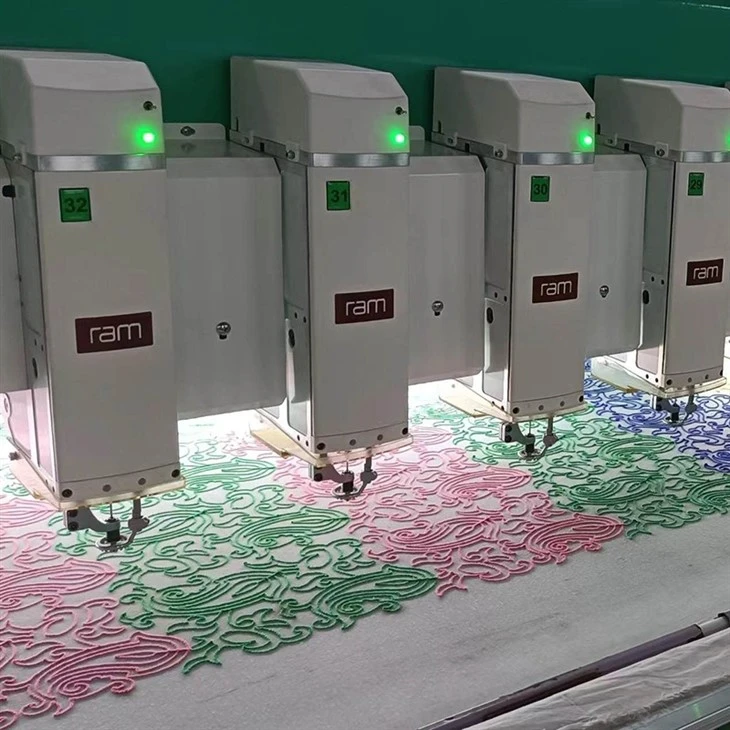


Embroidery machine speed matters not only for production but also for the quality of your design. Depending on whether you're using a home machine or a commercial machine, you'll have a different range of speeds to choose from, but this doesn't mean that the quality will be the same at all speeds for all types of embroidery projects.
Your machine speed is defined by how many stitches your machine can produce per minute. Increasing the speed might result in poor-quality embroidery projects. This is true for intricate and colorful embroidery designs, for example, in which case pushing the machine's speed often results in scrunched and puckered embroidery.
Factors that impact machine embroidery speed
The thread width, its material, the fabrics you're using, the type of embroidery you're creating, and embroidery digitizing are some of the factors that will change the machine embroidery speed requirements. This is important because each material you use needs a specific amount of tension and movement from the machine to reflect that material so that you don't have any puckering or bird nests on your final work.
1. The Type of Fabric
If you're running on different fabrics, you'll need different speeds for each one. If you're embroidering in heavy materials such as leather and vinyl or in very light fabrics that naturally tend to pucker, you'll need to slow your machine down. Generally, the faster the machine goes, the more pull you'll have in the machine's tension, which will increase the probability of puckering. This probability is higher when it comes to very thick or very light fabrics.
Fabrics like silks, nylons, tulles, and the like require gentler handling. A slower operation mode will create less tension while stitching, allowing the material to lay more naturally and lessening puckering in your embroidery designs.
2. The Type of Embroidery
Some types of embroidery require less tension to be drawn on the design, such as free-standing lace and embroidery designs with many colors and details. In those cases, an exceeded speed can result in an inconsistent piece that falls apart, in the case of the free-standing lace, or a distorted embroidery, in the other one.
3. Stitch Width
One crucial factor that will impact the machine's speed is the thread's width. Thicker threads will require you to slow down your machine because wider threads create more movement on the frame, and if it becomes wider, the machine will automatically slow down based on the width of the stitch.
4. Thread type and quality
Depending on the type of embroidery threads you're using in your embroidery designs, whether it's wool, acrylic, cotton, a heavy treat, or a more delicate thread, you might need to adjust the machine's speed to accommodate the least amount of thread breaks or nesting possible. Polyester threads are more consistent, durable, and tend to break less. On the other hand, Rayon thread is a synthetic fiber made out of wood cellulose, which makes it difficult to work with even though it looks beautiful.
Cheap and inconsistent threads tend to break easier; the same happens with old or out-of-date threads. Remember, threads do have a shelf life. Threads don't last long in dry, hot, or humid environments, so have this in mind before storing your threads in an inappropriate place.
5. Machine Type
Many home embroidery machines have an adjustable speed, and all commercial machines can be programmed to fasten or slow down according to production needs. These adjustments are helpful for different embroidery projects that will require different stitching speeds. Some commercial machines are engineered to accommodate a high-speed production with consistent quality.
Sometimes when the speed is too high in your machine for the embroidery you're working on, it can end up with skipped or missing stitches. Skipped stitches might mean that your machine is running too fast, and it doesn't have enough time to recover before moving to the next stitch. An exceeded speed can also cause the needle to deflect and miss the hook.
The primary factor that will impact your machine speed
Above everything else, embroidery digitizing is the most crucial aspect that will dictate how fast your machine can run. It's well known among the more experienced people in the embroidery industry that a well-digitized design will always give you better results.
The majority of machines run around 600-750 stitches per minute on average embroidery designs. If a design has plenty of color changes and trims, it will take significantly longer to embroidery the design. All these stops slow down embroidering. Embroidery digitizing cuts back on stops. Just to give you an idea, an average embroidery stop can take anywhere from 6 to 20 seconds. Some poorly digitized designs can have dozens of stops, adding a lot of time to production.
Using a well-digitized design with no thread breakage and no meaningless stitches digitized by our professional embroidery digitizing team makes a big difference. A skillfully digitized design must be production-friendly. Well-digitized designs will save you money and time and in the long run, will be able to recover the money you paid for it if you are using it multiple times. We know the embroidery problems solutions for quality embroidery designs.
We have 20 years' experience for manufacturing and selling Chinese embroidery machine. We will open international business for embroidery machine. We have confidence and technology!

FAQ
We're well-known as one of the leading chenille embroidery machine manufacturers and suppliers in China. Please feel free to buy custom made chenille embroidery machine at competitive price from our factory. Contact us for more details.
Cording Tape Embroidery Machine, Bead Embroidery Machine, Chenille Patch Machine